
Queens County Obituary Records
Obituary records for Queens County document deaths in New York City's largest borough by area. Queens County vital records are handled through the New York City system, with the NYC Municipal Archives holding historical death records and the NYC Department of Health managing recent ones. Published obituaries from Queens County newspapers add personal and family details not found on death certificates. Because Queens is part of New York City, the process for accessing death records differs from other New York counties that operate through town clerks and local registrars.
Queens County Death Records Through NYC Municipal Archives
The NYC Municipal Archives is the main source for historical Queens County death records. Located at 31 Chambers Street, New York, NY 10007, the archives can be reached at (212) 788-8580. They hold death records for Queens County from 1898 to 1948. Birth records cover 1898 to 1909. Marriage records span 1898 to 1949.
Before 1898, Queens was not part of New York City. Records from Long Island City date back to 1871. Scattered earlier records also exist. The consolidation of Queens into New York City in 1898 changed how vital records were filed. After consolidation, the NYC system took over. This is important for obituary researchers. If you are looking for a Queens County death before 1898, the records may be in a different location than post-consolidation files.
The NYC Historical Vital Records online portal lets you search digitized indexes to Queens County death records. This free tool covers the records held at the Municipal Archives. You can search by name and date. The results show index information that helps you order the actual certificate.
Recent Queens County Death Records
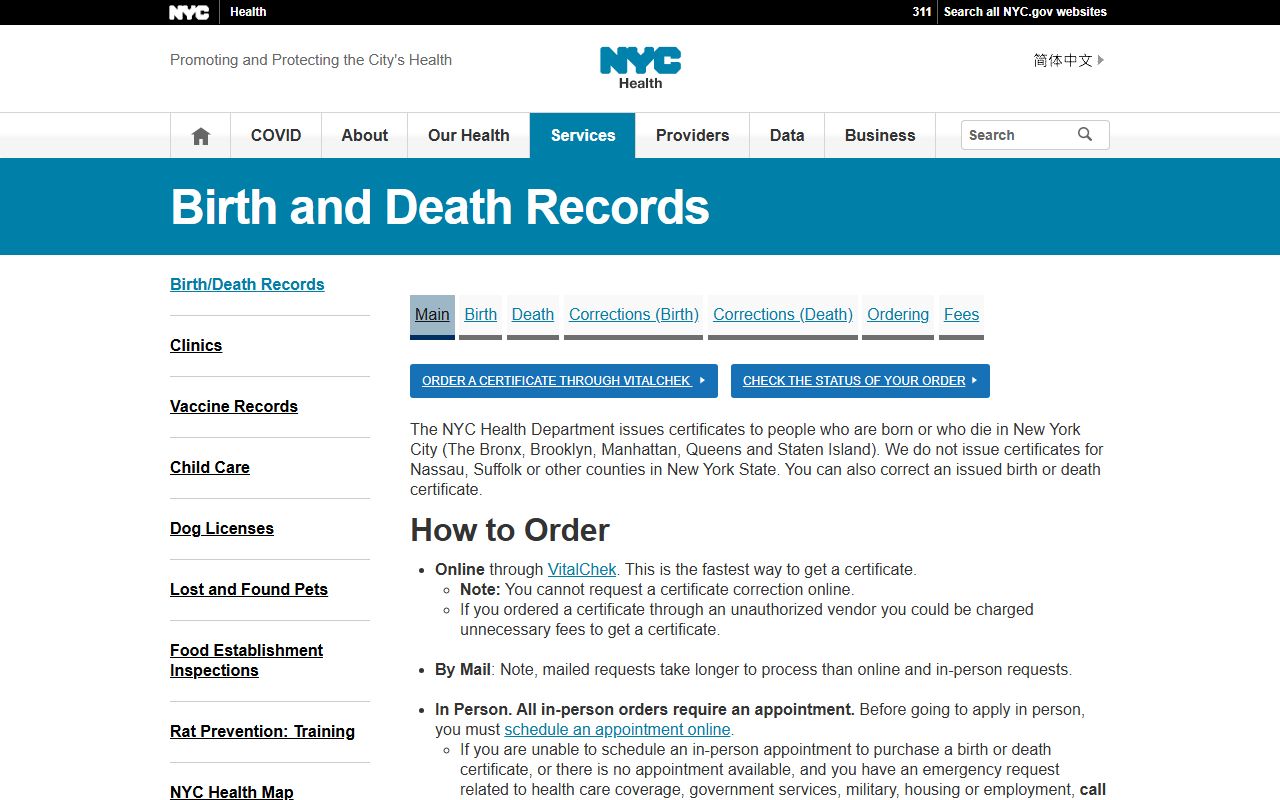
For deaths in Queens County after 1948, the NYC Department of Health and Mental Hygiene holds the records. This is a separate office from the Municipal Archives. The NYC DOHMH issues certified copies of death certificates for recent Queens County deaths. Fees and application procedures are listed on their website.
The New York State Department of Health also maintains copies of Queens County death records from 1881 onward. Under PHL § 4174, you can request certified copies from the state office. The fee is $30. You must show a direct interest in the record. For Queens County, you have the choice of going through the city or the state system. The city office may be faster for in-person requests. The state handles mail-in applications.
Searching for Obituaries in Queens County
Queens County obituaries have been published in dozens of newspapers over the years. The Queens Chronicle, the Queens Courier, and the Queens Gazette all carry death notices. Major New York City papers like the Daily News, the New York Times, and the New York Post also publish Queens County obituaries. Older papers like the Long Island Star and the Long Island Daily Press covered Queens before and after consolidation.
The Queens Public Library is a strong resource for obituary research. The library provides access to Ancestry and HeritageQuest databases at no cost to visitors. These databases include digitized death records, cemetery indexes, and newspaper obituary collections that cover Queens County. The library's Long Island Division holds local history materials, maps, and photographs.
Online tools make Queens County obituary searches easier than ever. FamilySearch has free indexes. Ancestry has extensive New York City death records. FindAGrave covers Queens County cemeteries. The Fulton History website offers free access to digitized New York newspapers, including some Queens County publications from the 1800s and 1900s.
Queens County Surrogate's Court
The Queens County Surrogate's Court handles probate matters for the borough. Probate files contain death dates, heir lists, and estate details. These are public records. The court is located in Jamaica, Queens. Probate records can supplement obituary research by providing names and relationships that were not included in published death notices.
For anyone researching a Queens County death, checking both the obituary and the probate file gives the most complete picture. Wills name beneficiaries. Administration papers identify next of kin. Estate inventories show what the deceased owned. These documents add context that a simple obituary cannot provide.
Historical Context for Queens County Records
Queens County's history complicates record searches. Before 1898, Queens County included what is now Nassau County. When Queens joined New York City, the eastern towns separated and formed Nassau County. This means that pre-1898 Queens County records may include deaths from areas now in Nassau County. Researchers need to keep this boundary change in mind.
Under PHL § 4140, death registration is required within 72 hours. In Queens County, this responsibility falls on the NYC system rather than individual town clerks. The NYC Office of Vital Records serves as the local registrar for all five boroughs, including Queens. Under PHL § 4147, copies are also filed with the state.
Cemetery Records in Queens County
Queens County is home to some of New York's largest cemeteries. Calvary Cemetery, St. John Cemetery, Mount Zion Cemetery, and dozens of others hold burial records for millions of people. These cemetery records include burial dates, plot locations, and sometimes family information. Many Queens County cemeteries maintain their own offices and can respond to research inquiries.
FindAGrave has extensive coverage of Queens County cemeteries. Volunteers have photographed headstones and transcribed inscriptions. For older deaths in Queens County, cemetery records may be the most accessible source when official death certificates are hard to obtain. Church records from Queens County parishes also contain burial entries that predate the official vital records system.
Cities in Queens County
Queens County is coterminous with the Borough of Queens in New York City. All vital records for Queens County are handled through the New York City system. There are no separate municipalities within Queens County. Neighborhoods like Flushing, Jamaica, Astoria, and Long Island City are part of the city and do not maintain independent vital records offices.